Walk into the truck of a seasoned plumber and you will see fewer crescent wrenches than you might expect, and more gear that looks like it belongs in a lab, a machine shop, or on a film set. Modern plumbing has moved far beyond pipe dope and brute force. The work still rewards strong hands and clear eyes, but the difference between a costly exploratory teardown and a targeted, one-hour fix often comes down to advanced tools and the experience to use them. A plumbing company that invests in the right equipment can diagnose faster, disturb less, and stand behind the repair with confidence.
Why precision changed the trade
Water hides damage until it wins. A pinhole leak can soak a subfloor for months without showing, a bellied sewer line can work fine in August and back up at Thanksgiving, and a slab leak can travel ten feet before surfacing. Guessing is expensive. It tears up tile, opens walls, and leaves you hoping. The tools that matter most now are not the ones that force a fitting, they are the ones that reveal what the eye cannot see and allow you to act with care.
Good plumbers have always valued accuracy, but code complexity, efficient fixtures, and new materials raise the stakes. PEX, CPVC, and high-efficiency appliances behave differently than old copper and cast iron. Water quality problems vary block by block. Insurance carriers and inspectors want documentation. Customers want their house clean and their hot water the same day. Precision tools make those promises possible.
The camera that pays for itself
Sewer cameras changed how we talk to clients about drains. Before cameras, you either cleared a blockage or you did not, and the best you could do for prognosis was a shrug. Now, a color monitor shows the line in real time. You can see roots at the coupling 62 feet out, the offset at the foundation, or the sag that holds a permanent soup. When a plumber says the line needs a repair, the owner sees why.
A good camera setup blends several details that matter in the field. The pushrod needs the right stiffness to go through long runs without looping, yet flexible enough to negotiate bends. The head should be self-leveling so the picture always reads upright. The transmitter must hit a locator clearly, even through wet soil. After a while, you learn what different materials look like: the speckled, rough texture of cast iron, the bright seams of PVC, the flaking inside orangeburg. You also learn when not to push, like when you feel a hard stop that might be a broken edge ready to snag and hold your expensive head.
Recording is half the value. Many a dispute has been settled by a five-minute clip with a tape counter and narration. If you run a plumbing company, make video capture standard with sewer calls. In my crews, we tell apprentices to call out measurements, direction changes, and pipe transitions, because those details make planning excavation or lining far simpler.
Locating with confidence, not guesswork
Once you see the defect on camera, you still need to find it in the world. That is where locators and transmitters earn their keep. A sonde in the camera head emits a signal that a hand-held locator can trace from the surface. Mark the line, mark the depth, and you can open a surgical trench rather than a crater.
Locators have quirks. Rebar in concrete and nearby metal lines can deflect signals. Wet clay soils can distort depth readings. I still prefer to cross-check with a second pass at a different frequency, then triangulate. In tight urban yards, you often have irrigation lines, gas, and telecom nearby. Good locators distinguish active power hum from the sonde tone, but a cautious plumber verifies anyway. On commercial jobs, pair the locator with a utility mapping scan to avoid an ugly surprise.
Sometimes the sonde cannot get there. Think of a trapped vent or a collapsed line. That is when a conductive transmitter and clamps come in. Bond the transmitter to a metal line, induce a signal, and trace the path. You do not get internal imagery, but you do map the route and estimate depth. On poly or PEX water services, a tracer wire or fish tape becomes your friend. The point is not perfect maps, it is minimizing the number of holes you drill or pits you dig.
Listening to water you cannot see
Acoustic leak detection is the skill that separates an “I think” from a “right there.” Electronic listening devices turn tiny pressure-activated sounds into something your ears can analyze. A leak in copper under a slab has a sharp, high-frequency hiss. A leak on PVC tends to be duller, sometimes rhythmic if a pressure regulator is chattering. The sensor picks up surface vibrations, and the amplifier filters ambient noise.
Technique matters as much as the box. You start at the meter, confirm movement with all fixtures off, then work in a grid. Check the service near the foundation, listen at hose bibbs, then interior points. On slabs, you will sweep the floor with a ground microphone, pausing at regular intervals. The loudest point is not always the source if the slab carries sound. You account for expansion joints and tubing layout if radiant heat is present. On older copper under slab, hot lines leak more often because of thermal stress. That detail guides the search.
When the leak sits in a wall, the sound transmits through studs differently than through plaster. A stud finder and thermal camera can support the ear. A hot leak shows as a warm plume; a cold leak sometimes cools a small patch due to evaporative effect. None of these are silver bullets. They are pieces of a picture that experience assembles.
When pressure tells the story
Test gauges, manometers, and differential pressure meters are humble, but they settle arguments. A simple 15 psi test on a shower pan, with a standpipe and a gauge, prevents a remodel disaster. A 100 psi air test on water lines, staged into zones with ball valves and caps, can narrow a leak search without lifting a floor. For gas, you follow code, typically a 10 psi test for a set period using a highly accurate gauge. Digital manometers read in inches of water column and catch pressure regulator problems that a standard gauge will miss.
Where pros tend to overcomplicate is in interpretation. A pressure drop of a half pound over fifteen minutes can be normal as pipe temperature equalizes, especially if air is the test medium on a cool morning. Re-run after stabilization, or switch to water if appropriate. On hydronic systems, a drop that appears only when the boiler fires points to a heat exchanger issue, not a slab leak. Record readings with time and ambient conditions, because someone will ask later.
Water quality instruments that prevent repeat calls
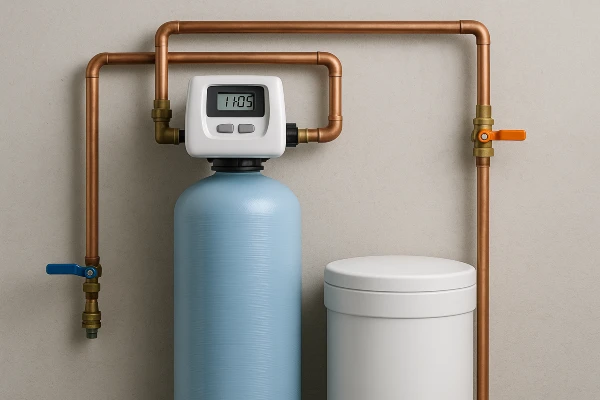
Many callbacks tie back to water quality rather than workmanship. Hard water scales tankless exchangers and clogs cartridges. Aggressive, low pH water eats pinholes in copper, especially on the cold side. A handheld multi-parameter meter is not fancy, but it supports the right recommendations. Temperature, pH, hardness, TDS, and chlorine levels can be checked in a few minutes. With those numbers, a plumber can justify a scale-reduction device on an on-demand heater, or a neutralizer on acidic well water that keeps chewing fittings.
I keep test strips for quick screening and a better meter for serious https://theleanderplumber-company.com cases. If you see greenish staining in tubs and low pH with high carbon dioxide, talk corrosion control. If you find 18 to 25 grains of hardness, do not install a tankless without either a softener or a strong descaling plan. For a plumbing company, training techs to say “Here is the number, here is what it does to your system, here is the cost of not treating” changes the conversation from sales pitch to evidence-based guidance.
Thermal imaging that earns its keep on cold mornings
Infrared cameras do not see water, they see temperature differences, but that is often enough. On radiant floor loops, you can trace PEX paths, find cold spots, and avoid drilling into heat. In walls, a slow leak behind drywall chills a vertical stripe. During winter, an exterior hose bibb line in a poorly insulated bay stands out as a cold vein that is asking to freeze.
An IR camera is easy to misuse. Reflections off glossy surfaces show false hot spots. Sun exposure warms a wall and hides anomalies. The best practice is to create a delta: run hot water through the suspected line for two minutes, then scan. On hydronic loops, bump the thermostat and watch patterns develop. Pair what you see with a moisture meter, pinless first to avoid marring finishes, then pin-type in a discreet spot if readings spike. The image plus the moisture data gives you a defensible reason to open a specific square foot of wall, not the whole panel.
Cutting and joining with less mess
Torch work still has a place, but heatless joining methods expanded what we can do in tight, finished spaces. Press-fit systems for copper and stainless create strong, code-compliant joints with a calibrated pressing tool and the right jaws. The work goes fast, and you skip fire watch and burned insulation. Press is not a cure-all. The fittings cost more, and you need absolute cleanliness. Any burr or out-of-round pipe can compromise the seal. I teach apprentices to deburr inside and out, mark the insertion depth, and verify o-ring condition before committing. A failed press is almost always prep error.
For PEX, expansion tools and crimp systems divide many shops. Expansion with PEX-A provides a full-flow connection and is forgiving in cold weather; crimp and clamp systems with PEX-B or PEX-C are simple and widely available. What matters most is tool calibration. Check your expander heads for wear and your crimpers for gauge accuracy. I have seen more leaks from tired crimpers than from brand choice. In either case, support long runs to prevent sag, and respect UV exposure limits if the line sees sunlight during install.
Reciprocating saws with proper tooth count blades, compact band saws, and variable-speed grinders with thin cutoff wheels help make clean, square cuts on steel, copper, and plastic. A miter box for PVC seems old-fashioned until you see how a crooked cut ruins a solvent weld. Deburring tools and reamers are not optional. They protect o-rings, reduce turbulence, and preserve flow.
Smart pumps and the meters that tame them
Pumps and controls turned into a small science. On residential well systems and booster sets, variable frequency drives smooth pressure and reduce hammer. They also create diagnostics. A drive that trips on underload can indicate a dry well or a suction leak. On sewage ejectors and grinder pumps, panel alarms with discrete fault codes shorten troubleshooting. A clamp meter with inrush capture reveals a failing capacitor or a dragging motor bearing without opening the sealed basin.
Circulators for hydronic and recirculating domestic hot water lines now come with ECM motors, auto-adaptive modes, and Bluetooth commissioning. That is not a gimmick. On a three-story home with long return runs, tuning curve and runtime by app can save watts and prevent ghost flow. When plumbers ignore the data, you get complaints about lukewarm upstairs baths and energy bills that do not match the high-efficiency boiler brochure. A few minutes spent recording head, flow, and temperature differential with a good thermometer and pressure ports elevates guesswork into design.
Jetters, cutters, and the discipline of clean drains
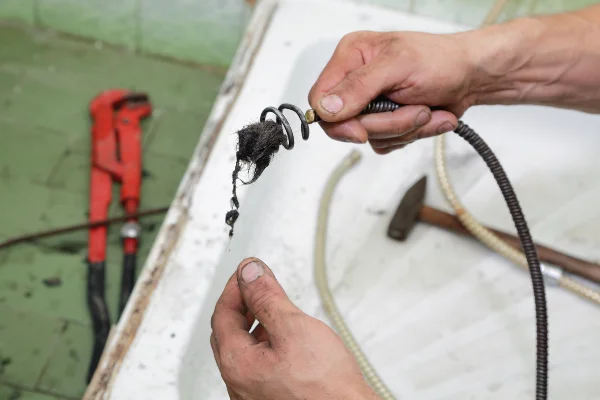
Cable machines still clear many drains, but water jetters and cutter systems raise the standard. A jetter supercharges water to scour the interior of the pipe, removing grease films and soft roots that a cable only pokes through. Choose the nozzle for the problem: a penetrator for initial opening, a spinning nozzle for grease, a warthog-style for heavy scale in cast iron. Jetting without a camera is asking to miss the “why.” After clearing, run the lens, document, and recommend repairs or maintenance.
Sectional and continuous cable machines have their place when you need tactile feedback. Experienced hands feel a root ball, a broken pipe edge, or a hard stoppage that might be a dropped cleanout cap. High-torque cutters can damage fragile orangeburg or thin-wall ABS, so pick heads carefully. Safety is not optional here. Gloves that are too grippy can catch and pull your hand. Teach techs to respect rotation and to control feed, not ride it.
Adhesives, sealants, and the chemistry beneath the threads
Pipe dope is not a religion, but brand, viscosity, and compatibility do matter. Some sealants soften ABS, others are not rated for gas or for high-temperature systems. PTFE tape varies in density and thickness. Thin tape on a coarse-threaded galvanized fitting is useless. I prefer a two-step approach on many metal threads: two wraps of quality tape, then a compatible dope that fills the remainder. On plastic, many pros skip dope altogether to avoid over-lubrication that can lead to over-tightening and cracking. Follow torque sense, not biceps.
Solvent welding for PVC and CPVC deserves more respect than it gets. Primer and cement work by softening and fusing. Cold weather and wet pipe change cure times. A rushed glue-up on a pressurized line fails exactly when the drywall is back. Read the can for temperature and cure ranges, and give the joint time to develop strength. For CPVC on hot water, use the right yellow or orange cement and avoid excessive bending at fittings, which can create stress cracks later.
Epoxy putties and repair clamps are temporary tools with real value. On an emergency call at midnight with a split copper line, a properly sized clamp buys a homeowner sleep until morning when you can replace the problem section. Write the word “temporary” on your invoice so expectations are clear.
Data, documentation, and the trust factor
Advanced tools also mean better records. A tablet with a simple form beats a notepad when you need to attach photos, pressure logs, and videos. Modeling software is overkill for most service calls, but basic diagram apps help explain options. When people understand the condition of their system through images and measured data, price objections soften. A plumbing company that sets standards for documentation will see fewer callbacks and stronger reviews.
In my crews, we kept a short checklist for every diagnostic call to avoid missed steps and to speed training. It lived on the dashboard rather than in a binder.
- Confirm baseline: meter check, pressure reading, and shutoffs mapped. Capture evidence: photos of the work area before and after, video of internal pipe conditions when applicable. Verify fix: functional test with time stamps, re-check pressure or flow, and customer walk-through.
Customers often do not care what brand of locator you used. They care that you found the leak without tearing their kitchen apart, that you showed them what you saw, and that the result held. Consistent documentation turns skill into proof.
Edge cases and where old-school still wins
Even with all this gear, there are jobs where the simplest tool carries the day. Hammer-tapping along a baseboard sometimes finds a hollow sound that a fancy meter misses. A mirror on a stick shows corrosion in a tight chase where a camera will not fit. Duct tape and a trash bag make a clean, quick containment when you open a wet ceiling and need to protect a room while you work. On a cold snap, a heat gun and patience thaw a line safer than any miracle gadget.
There are also places to say no. Lining a sewer with minimal cleaning in a line full of scale invites a future collapse. Pressing a fitting inside a chase crowded with wiring without fire sleeves or clearance is not worth the risk. Running a jetter on a line with known orangeburg can turn a service call into a dig. Experienced judgment, not the price tag of the tool, keeps a job from going sideways.
Training the hands that hold the tools
Tools do not fix anything by themselves. Apprentices learn better when they can handle equipment early, even if they are just setting it up and cleaning it. A ride-along where a trainee spends thirty minutes tracing a line with a locator, then checks their marks against a senior tech’s marks, is worth ten toolbox talks. Rotate the responsibility to narrate camera inspections so that juniors learn how to communicate findings. Make calibration and maintenance part of the job. Press tools need jaw checks, jetters need nozzles cleaned, cameras need lenses wiped and pushrods inspected for kinks.
A plumbing company that budgets two to three percent of revenue for tooling and training stays ahead. Replace tired equipment before it becomes unreliable. Keep loaner tools so a tech is never tempted to “make do” with a broken gauge or a dull cutter. When you do buy, prioritize serviceability and support. The fancy meter means little when you cannot get a replacement probe by Friday.
Choosing tools for the work you actually do
Not every shop needs every toy. A service-heavy outfit benefits more from cameras, locators, press tools, and jetters than from big-bore threading machines. A remodel-focused team gains from expansion PEX tools, compact inspection cams, laser distance meters, and dust control gear. If you do commercial boiler rooms, invest in combustion analyzers, differential thermometers, and balancing instruments. If you run rural wells, stock pitless adapters, torque arrestors, megohm meters, and test pumps.
Be honest about utilization. A $12,000 jetter that runs twice a month is better rented until drain volume grows. A $3,000 camera that rolls out three times a day pays back in weeks. Track tool use by job type to inform the next purchase. Ask techs what slows them down, then find the tool that removes that friction.
The quiet joy of a clean fix
There is a particular satisfaction when the gear and the judgment line up: the camera shows a cracked hub under the driveway, the locator paints a clean path, the saw cuts a perfect rectangle, the repair clamps on without drama, and the homeowner is surprised how little mess you made. That is the promise of advanced plumbing tools. They protect homes, save time, and reduce guesswork. They also make the trade more interesting. You are not just turning wrenches, you are interpreting signals, measuring systems, and making decisions with better information.
For customers choosing a plumber, ask about the process, not just the price. Do they camera the line after a blockage? Can they provide a pressure log or a video clip? Do they have the means to locate a leak without tearing things open? The right answer does not need brand names, it needs confidence backed by method.
For plumbers, keep learning the gear, keep teaching the team, and keep your truck stocked with the tools that let you see, measure, and document. The wrench still matters, but the work now lives beyond it.
THE LEANDER PLUMBER - COMPANY 1789 S Bagdad Rd #103, Leander, TX 78641 (737) 530-8021