Commercial decks carry more than tables and people. They carry liability, occupant expectations, and the full weight of a building official’s red pen. When wind and earthquakes enter the picture, the details that barely matter for a small wooden deck behind a house can make or break a permit set for a restaurant terrace or a hotel amenity level. The physics are unforgiving, and so are the codes. The good news is that the rules are not mysterious once you know where to look and how to apply them.
I design and review decks for public occupancies a few times each year, often as part of larger tenant improvements. Nearly every project hits the same pressure points: lateral load path, connections, diaphragm behavior, and what to do at those corners where uplift, torsion, and people-induced vibration all meet. What follows is a practical tour through the essentials, grounded in model codes and the way plan reviewers and inspectors actually look at these structures.
The code landscape and what it means for decks
Commercial decks fall under the International Building Code, which governs risk category, occupancy, live loads, and how you determine wind and seismic forces. The International Residential Code has prescriptive guidance for small wood decks tied to one- and two-family dwellings. Those residential deck building codes are handy for homeowners and light-duty projects, but they stop where public assembly begins. A commercial terrace with 150 diners, a rooftop lounge, or a casino balcony must meet commercial deck building codes tied to ASCE 7 load criteria, not the simplified tables in residential guides.
Plan reviewers typically expect the following references in a commercial deck submittal:
- IBC (edition adopted by the jurisdiction), for occupancies, importance factors, structural materials, guards, and egress. ASCE 7, for wind and seismic forces, load combinations, and serviceability. Material standards, such as AWC NDS for wood, ACI 318 for concrete, AISC for steel, and AWC SDPWS for wood shear design when diaphragm or shear wall behavior is used.
Even if the deck is a wooden deck, the path to approval passes through ASCE 7. Wind speed maps, exposure categories, seismic design categories, and importance factors apply. For occupancies with assembly uses, Risk Category II is typical, but some decks tied to essential facilities or high-occupancy spaces can fall under higher categories that increase design forces and detailing.
Live load sets the baseline
Wind and seismic forces matter, but gravity loads control many elements. IBC requires higher live loads for assembly areas than for residential. For dining terraces, 100 psf is a common benchmark for general assembly areas without fixed seating. Some spaces require 125 psf or more depending on use and local amendments. Combined with dead load from finishes, planters, and fixtures, this sets member sizes and deflection criteria. You cannot fix lateral problems by making beams huge, yet undersizing beams creates sway and vibration issues that a robust lateral system then has to fight.
Where decks support heavy planters or outdoor kitchens, put those loads in the model explicitly. If a deck supports a retractable canopy, include its self-weight and the associated wind loads. Early coordination with the architect and deck building contractors pays off; load assumptions change late in the game, and revising the lateral system is harder than swapping out a joist.
Wind design fundamentals for decks
Open decks see more wind than interior floors. Wind flows under and over, and in some cases through guard rails and screens, producing uplift and lateral pressures that punch above their weight. ASCE 7 has two sets of tools: directional procedures for main wind force resisting systems, and component and cladding pressures for elements like guard panels and canopies.
Exposure category matters a lot. An elevated deck in a coastal setting or on a high-rise podium faces Exposure C or D, which can double pressures compared to a sheltered Exposure B site. Parapets, wind screens, and overhead shade structures behave like sails. The safe way to think about the deck is as a platform that wants to lift and slide under wind action, and that needs a defined path for those forces into the building.
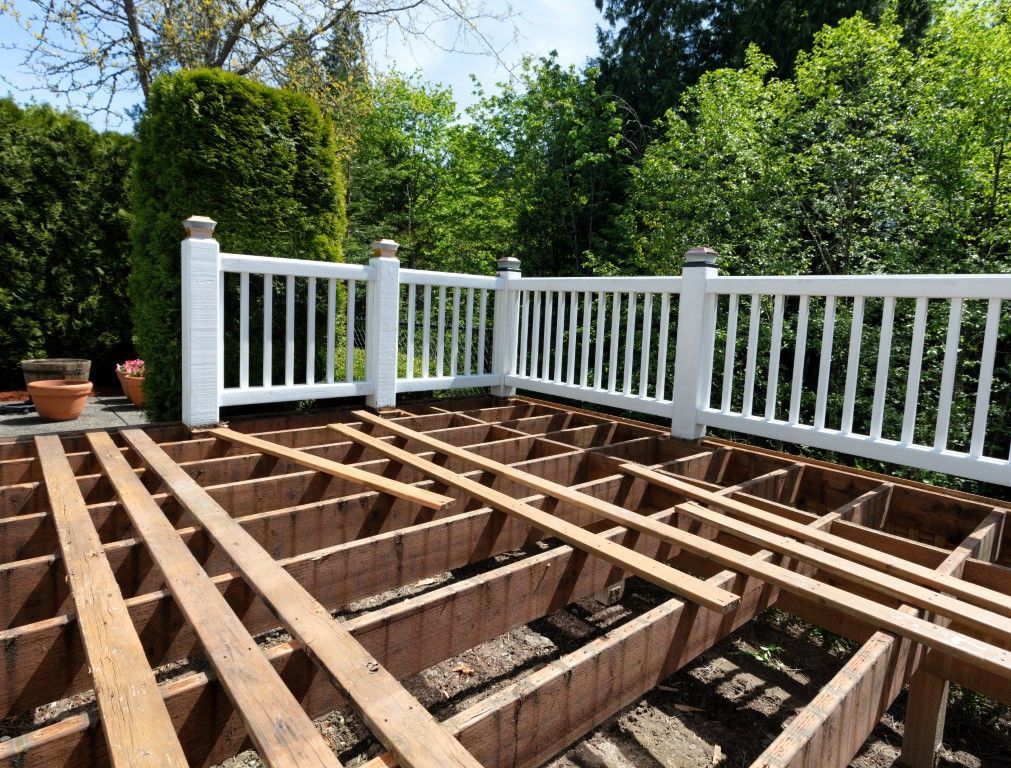
Uplift deserves careful attention. Positive attachment to the primary structure through tension ties or holdowns is not optional on taller decks or anywhere Exposure C applies. When a contractor calls to say a ledger has been “over designed,” that usually means uplift bolts were missed in the bid. The field fix then means cutting into finishes to find anchorage, which everyone hates. Place those details prominently, and show them in 3D if you can.
Guard posts and railings see localized, high-magnitude loads from both code-mandated crowd pressures and wind on infill panels. A common issue: specifying sleek, minimally intrusive posts and then discovering that wind on glass infill produces fastener and base plate demands that conflict with the clean look. Either increase post section and base plate thickness, or introduce a continuous top rail with stiffness to distribute load across multiple posts. Work that out before the shop drawings land.
Seismic design: not just for the West Coast
Even in moderate seismic regions, a freestanding or partially independent deck can experience significant inertial and racking forces. The lateral system has to collect those forces and deliver them to a foundation capable of resisting overturning and sliding. If the deck is attached to a building that moves differently, you have https://www.mapleprimes.com/users/gwedemflwa to choose a behavior: make the deck move with the building through rigid connections, or provide seismic joints and let it move independently.
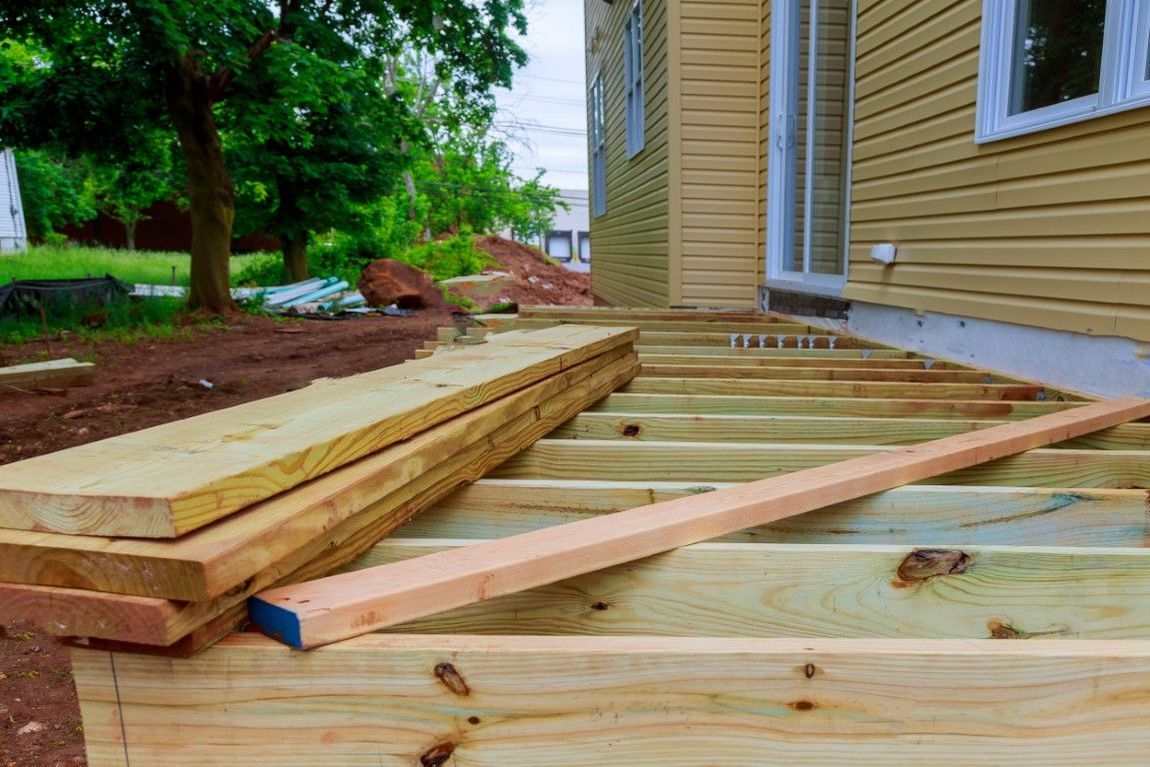
Two patterns show up repeatedly:
- Decks framed back to a building using ledgers and collector beams, with posts at the outer edge. In seismic events, the outer line wants to kick, rotate, and uplift. Install holdowns at outer posts, provide cross bracing in plan or elevation, and detail diaphragm collectors to carry in-plane forces back to the building diaphragm or shear walls. Freestanding decks on multiple lines of posts. Here the deck acts like a small building with its own lateral system. Use braced bays in both directions, sized for the seismic base shear derived from ASCE 7. Pay attention to redundancy and torsion. A single bay of bracing in one corner is a drift magnet.
Seismic anchorage into existing structures is often more complex than new foundations. Expansion anchors into old CMU or lightweight concrete rarely provide the tension and cyclic performance you need. Where possible, step to cast-in anchors or epoxy adhesive anchors with tested seismic ratings, installed by certified personnel, with proof loads or special inspection as required. When this is not possible, you may need to add steel frames or new concrete grade beams adjacent to the building to take lateral loads without relying on uncertain anchors.
The continuous lateral load path
Every wind pound and seismic impulse must find its way to the ground without falling off a cliff. That means continuous straps, bolts, blocking, chords, collectors, and braced elements that align on paper and can be built as detailed. On decks, the weak links are usually:
- Guard post connections to framing, especially at corners and stairs where loads accumulate. Diaphragm discontinuities at step-ups, hatches, or planters that break sheathing continuity. Ledgers that do not have a companion collector to grab diaphragm forces.
Think of the deck surface as a diaphragm, even if you are not using a formal wood diaphragm design. If the deck receives lateral load from guards or wind screens, it must distribute that load to stiff vertical elements. Relieve the deck boards or pavers from this duty; they are not designed to act as diaphragms. Use plywood or OSB sheathing beneath sleepers, or a structural steel deck layer, to create a real diaphragm. When working with a wooden deck that uses pedestal pavers or spaced boards, add a hidden lateral platform where it counts, then float the finish above.
Uplift, overturning, and the battle at the perimeter
Where wind hits the corners, uplift and torsion peak. The outer edge posts and the connections at corners are the first components that betray underdesign. A quick rule of thumb when scoping: if you are in Exposure C or higher and the deck edge is more than one story above grade, budget holdowns at every outer post line and tension ties at 4 to 6 feet on center along the ledger. In steel, that translates to double-nut rod anchors, extended base plates, and gusseted braces. In wood, think Simpson HDU or HDB style holdowns, through-bolted into post stacks that are continuous to the foundation.
At foundations, isolate uplift paths from soft soils or patios that cannot provide tension. Spread footings are great for compression, but for uplift, a deep pier with a suitable bell or helical anchor can be more reliable. Keep the details consistent. Nothing derails inspections faster than a schedule calling for M20 anchors into a 12-inch pier with 18 inches of embedment that cannot be achieved without pouring deeper or changing the anchor type.
Diaphragms, collectors, and edges that do more work than they seem
On a plan, a deck is a simple rectangle with joists and beams. In lateral behavior, the edges and corners act like patches of muscle that have to carry the load of the whole. When a guard rail receives a 50 plf uniform load for crowd pressure or a 200-pound concentrated load, that force must jump into the nearest stiff line. If you rely on a single rim joist to act as a chord, check its capacity and the connection of every hanger or fastener along that edge. Adding a second rim, blocking, and a continuous strap makes a measurable difference. In steel framing, use continuous angles or channels as edge chords, with bolted splices and direct connections to braced frames.
Discontinuities are unavoidable on amenity decks. Expansion joints in the building, drainage scuppers, stair openings, or planter beds interrupt the diaphragm. Where the diaphragm is cut, provide steel collectors that bridge the gap, or add localized bracing that bypasses the diaphragm. Field coordination is critical; a planter moved 18 inches inboard can sever a chord if the drawings did not make the load path obvious.
Materials and connection choices
Wood, steel, and concrete each solve different problems well. For commercial decks exposed to weather, pressure-treated wood is common for economy, but it demands care with corrosion and creep. Galvanized or stainless connectors are standard in coastal or deicing-salt environments. Steel frames handle long spans and integrated bracing with less depth, which helps under storefront windows or canopies. Concrete podiums with deck toppings offer mass and stiffness, which tame vibration and resist lateral forces with minimal fuss, though they are heavier and slower to build.
Fasteners and connectors need the same level of attention as beams. Use ICC-ES evaluated anchors for ledgers, and do not mix connector lines across a connection without checking the load path. A ledger with structural screws into LVL can carry gravity well, but if wind uplift or diaphragm collectors depend on that ledger, confirm that edge distance, screw withdrawal, and group behavior under cyclic loads meet the demands. In steel, insist on pretensioned bolts for primary lateral connections, especially where slip would affect drift or serviceability.
Serviceability: vibration, drift, and human comfort
The structural model that satisfies ultimate loads might still feel wrong underfoot. On busy decks, occupant comfort and perception matter. Joist and beam spacing affects vibration more than most expect. For assembly decks, keep span-to-depth ratios conservative. A deflection limit of L/360 under live load is a starting point, but vibration criteria often push you to L/480 or stiffer in the main span. If the deck carries a dance floor or live music, stiffness targets should be higher. Tuning the system with strategic blocking, continuous decking, or a thin composite topping can quiet a lively deck.
Drift under wind or seismic load should not crack finishes, damage glazing adjacent to the deck, or rack doors. If the deck supports a wind screen or canopy tied into posts, check relative displacement compatibility. A slender glass screen that looks fine under static load may chatter and break if the supporting posts sway.
Guard rails and wind screens
Guards serve both life safety and structural roles. Commercial codes require guards to resist concentrated and uniform loads that reflect crowd conditions. When wind screens or privacy panels get bolted to the guards, the load doubles or triples, and fatigue can enter the picture in windy regions. It helps to separate the functions: design a primary structural frame to take wind and seismic forces, and attach guards to it with brackets that avoid adding unintended moments to slim posts. If that is not feasible, make the guard system intentionally structural, and set expectations early about post sizes and base plates.
Baluster spacing and glass thickness are governed by separate provisions. Combine that with hardware resistance to corrosion and thermal movement, and you have a detail that demands mockups. Ask deck building contractors who work with custom rail fabricators; they will tell you two things fail in the field: fasteners into decayed wood, and glass panels that drift into contact with metal, chipping edges. Leaving a clean 3 to 5 millimeter tolerance and employing resilient setting blocks avoids an expensive callback.
Foundations and anchorage in real soils
Foundations for decks live in the messy part of the site. On podiums, anchorage is simpler because you are tying into a structural slab or beam. On grade, soils vary, utilities appear where you hoped to place a pier, and frost heave threatens shallow footings. In windy zones, uplift governs pier size more often than compression. A 16-inch diameter, 4-foot-deep pier might take the gravity load, but if you have 2 to 3 kips of uplift, you need more embedment or a mechanical anchor like a helical. Coordinate the pier layout with utilities early, and provide alternates in the drawings so field crews are not forced into site-driven improvisation.
Ledger connections to existing masonry or concrete need proof. Old brick and lightweight CMU do not hold anchors in tension well. If the ledger must attach to such substrates, consider adding a steel ledger bolted through to interior steel or to new concrete grade beams that you control. For wood-framed buildings, find or create solid blocking at the ledger elevation, and keep fastener edge and end distances generous. Water management is integral: a ledger that rots from poor flashing becomes a structural problem within a few seasons.
Detailing for durability and inspection
Inspectors focus on the pieces they can see and touch: fastener types, edge distances, labeling on anchors, nail patterns in sheathing, and corrosion protection. Detail with those checkpoints in mind. Specify fastener coatings appropriate to preservative treatments in wood. Hot-dip galvanized or stainless resists the chemicals in today’s treated lumber better than electro-galvanized. Use sealants and flashings that play nicely with dissimilar metals and with adjacent membranes.
Drainage is not just an architectural concern. Standing water adds dead load, accelerates decay, and hides defects. Slope surfaces to drains, use ventilation space under deck boards, and avoid trapping water against ledgers or at post bases. Where posts penetrate membranes, detail boots and counterflashing that can be inspected and replaced. If a post shoe collects water, switch to a stand-off base that lifts the wood clear of the splash zone.
Coordinating architectural intent with structural reality
A commercial deck lives at the intersection of aesthetics, program, and code. The architect wants transparency at the guard and thin edges. The operator wants planters, heaters, lighting, and flexible seating. The code demands live load, guard strength, egress, and fire separation. Bring wind and seismic considerations into that conversation as early as schematic design. If a 7-foot-tall wind screen is critical for comfort, allocate structure for it in the concept phase. If the project leans toward a minimalist wooden deck, decide where the lateral system hides. Steel knife plates can simulate thin posts while quietly carrying loads, but they require shop accuracy and careful galvanizing.
I keep a running list of negotiation items when I start a deck project: acceptable post thickness, maximum base plate footprint, locations where braces can live without spoiling sightlines, and whether the client can live with thicker rails if that saves money. Those choices ripple into procurement and shop drawing cycles, so nailing them down trims months off the schedule.
Permitting, documentation, and special inspection
Plan reviewers want a coherent story. That means a cover sheet with design criteria, including risk category, live loads, wind speed and exposure, seismic design category, importance factors, and material standards. Show the lateral system on plan, not just in notes. If you rely on diaphragm action, include nailing patterns, sheathing types, boundary nailing, and chord and collector details that align with the plan. For braced frames, mark the bays clearly, provide connection details, and list expected forces. For guard systems, present both the architectural elevations and the structural support strategy with load path notes.
Expect special inspection for adhesive anchors in seismic regions, for high-strength bolt pretensioning in steel frames, and for welds that are part of the primary lateral system. If the project includes post-installed anchors that resist tension, anticipate pull testing in the field. Budget time for that work, and make sure the deck building contractors bring certified installers. Inspectors are friendlier when the paperwork is organized and the anchors match the submittals.
Residential vs commercial mindset
People often ask if lessons from residential deck building codes help on commercial projects. They do, but only as a starting point. Residential prescriptive details are tuned for lower live loads, simpler lateral systems, and smaller plan sizes. Ledger bolting schedules, joist spans, and typical post bases work fine for small backyard decks. Scale those details up to a public deck and you will find yourself short on stiffness and without a coherent lateral strategy. The commercial deck building codes push you to quantify wind and seismic forces, provide a diaphragm or frames, and verify uplift resistance. The difference is not academic. It shows up in post sizes, base plate thickness, anchor embedment, and the overall feel of the deck under a crowd.
Contractors who cut their teeth on residential work can succeed in commercial work if they respect these differences, adopt shop drawing rigor, and coordinate early with engineering. Conversely, an engineer can get a residential deck through faster by borrowing commercial habits: write clear load criteria, show the lateral path, and check uplift even when it seems small.
Practical checkpoints before you stamp
A short, high-value checklist that has saved me more than once:
- Confirm risk category and live load with the building official early, especially for mixed-use terraces with changing programs. Lock the wind exposure category with the project team, and verify whether adjacent buildings or terrain alter it. Draw the lateral load path: diaphragm or frames, chords and collectors, holdowns and anchor types. Make each link explicit. Identify all guard, wind screen, and canopy support points, and check combined wind, seismic, and crowd loads through their bases. Detail water management and corrosion protection at ledgers, post bases, and through-membrane penetrations, and assign special inspections where required.
A brief field story about uplift you can feel
A few years back, a restaurant deck sat one story above a breezeway, facing a lake. The design team had done a solid job on gravity and drift, but wind uplift along the edge had been underestimated. During a fall storm, staff noticed the outer stair handrail thumping. The posts were tight, but the stair stringer had a slight bounce as gusts hit. Investigating on site, we found that the outer edge posts had adequate compression capacity, but the holdowns were spaced at 12 feet and anchored into shallow piers. The fix involved adding mid-bay holdowns tied to deep helical anchors, then installing a continuous steel angle under the rim to distribute uplift. The thump disappeared, and the general contractor added “edge uplift check” to their pre-pour checklist for future decks. That small change turned into a standard practice on several projects in windy locations.
Cost, schedule, and where to spend
Wind and seismic design do not have to blow the budget. Money spent on a clear load path usually saves cost in the finish elements. A few patterns:
- Spend on holdowns and anchors at the perimeter rather than scattering heavy hardware everywhere. Consolidate bracing into a few bays where screens or planters can hide members, and keep other bays clean to satisfy the architect. Use a thin structural diaphragm layer under deck finishes to make guard and screen anchorage simple. The labor savings on misc. steel and blocking offsets the cost of sheathing or steel deck. Standardize post base and top connection details so the fabricator can repeat cuts and the inspector sees the same pattern across the deck. Choose fastener finishes that match the environment from the start. Replacing wrongly coated hardware a year later costs multiples.
Final thoughts from the field
Strong commercial decks read as quiet confidence. Nothing rattles in the wind, the guard feels solid under a shoulder check, and the surface does not dance when a crowd leans to watch a fireworks show. You get there by respecting the forces you cannot see, documenting a clean path for them, and teaming with contractors who build what is drawn. Whether you are coming from the world of residential deck building codes or you live in the domain of commercial deck building codes, the essentials are the same: quantify, connect, and protect.
When owners ask what matters most, I tell them this: decide early how the deck will take lateral loads, and let that choice guide everything from post locations to railing aesthetics. The rest falls into place. And if you need a tiebreaker on a detail, call the person who will install it. The best lessons I carry come from installers who have stood on a ladder in a winter wind, aligning a base plate while the first snow hits. They remember what works.
Business Name: CK New Braunfels Deck Builder
Address:
921 Lakeview Blvd,
New Braunfels,
TX
78130
US
Phone Number: 830-224-2690
CK New Braunfels Deck Builder is a trusted local contractor serving homeowners in New Braunfels, TX, and the surrounding areas. Specializing in custom deck construction, repairs, and outdoor upgrades, the team is dedicated to creating durable, functional, and visually appealing outdoor spaces.
Business Hours:Mon 7AM-7PM
Tue 7AM-7PM
Wed 7AM-7PM
Thu 7AM-7PM
Fri 7AM-7PM
Sat 7AM-7PM
Sun 9AM-5PM
CK New Braunfels Deck Builder
CK New Braunfels Deck Builder is a local company located in New Braunfels, TX. They serve their community by providing high quality yet affordable deck building services. They specialize in wooden deck building, composite deck installation
CK New Braunfels Deck Builder is a local business in New Braunfels, TX
CK New Braunfels Deck Builder builds and installs wooden and composite decks
CK New Braunfels Deck Builder phone number is (830) 224-2690
CK New Braunfels Deck Builder address is 921 Lakeview Blvd, New Braunfels, TX 78130
CK New Braunfels Deck Builder website is https://www.deckbuildernewbraunfelstx.com/
CK New Braunfels Deck Builder offers wooden and composite deck repair
CK New Braunfels Deck Builder has a Google Maps Listing and you can check it here https://maps.app.goo.gl/sBMARoL4Yy9rREzY8
CK New Braunfels Deck Builder serves the historic Gruene Historic District (with Gruene Hall) area.
CK New Braunfels Deck Builder serves residents near Sophienburg Museum & Archives area.
CK New Braunfels Deck Builder serves residents around Comal County Courthouse
CK New Braunfels Deck Builder serves neighborhoods around the New Braunfels Historic Railroad & Modelers Society area.
CK New Braunfels Deck Builder has this Facebook page
Facebook
CK New Braunfels Deck Builder has this Twitter page
X
CK New Braunfels Deck Builder has this YouTube Channel YouTube
CK New Braunfels Deck Builder has this LinkedIn profile LinkedIn
CK New Braunfels Deck Builder has this Pinterest profile
Pinterest